
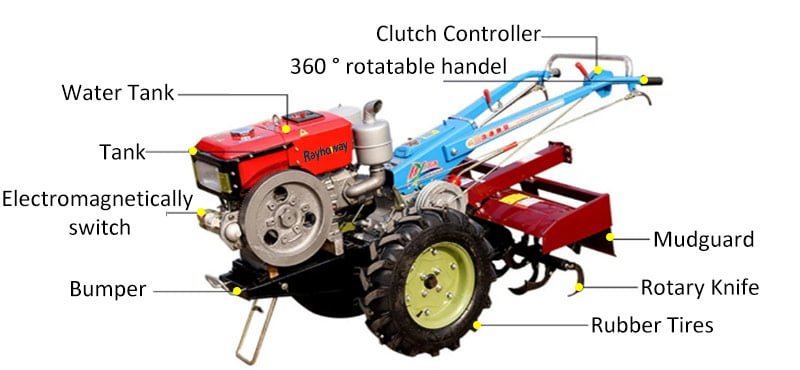
A walking tractor, also known as two-wheel tractor or hand tractor, is versatile and compact machines designed primarily for agricultural tasks. They are particularly popular in small-scale farming operations and in regions where larger, more expensive machinery is impractical. This article explores the effectiveness of walking tractors, examining their advantages, limitations, and impact on farming efficiency.
Advantages of a Walking Tractor
Versatility
Walking tractors are renowned for their versatility. They can be equipped with various attachments, enabling them to perform a wide range of tasks, such as plowing, tilling, harrowing, planting, and weeding. Additionally, they can be used for non-agricultural purposes like transportation, irrigation, and even construction tasks, making them a valuable asset beyond farming.
Cost-Effectiveness
One of the primary benefits of walking tractors is their affordability. They are significantly cheaper than traditional four-wheel tractors, making them accessible to smallholder farmers and those with limited financial resources. The lower cost of maintenance and fuel consumption further enhances their cost-effectiveness, allowing farmers to maximize their investment.
Accessibility and Usability
Walking tractors are designed to be user-friendly. Their simple structure and controls make them accessible to farmers with minimal technical knowledge or experience. Moreover, their compact size allows them to maneuver easily in tight spaces, such as small fields, orchards, and gardens, where larger tractors would be impractical.
Fuel Efficiency
Compared to larger tractors, walking tractors consume less fuel, which is both economically and environmentally beneficial. Their fuel efficiency translates to lower operating costs and reduced carbon emissions, aligning with sustainable farming practices. This advantage is particularly significant in regions where fuel costs are high or fuel availability is limited.
Labor Efficiency
By mechanizing labor-intensive tasks, walking tractors can significantly reduce the physical strain on farmers and increase labor efficiency. This mechanization allows farmers to complete tasks more quickly and with less effort, improving productivity and freeing up time for other activities.
Limitations of a Walking Tractor
Limited Power
Walking tractors, while versatile, have limited power compared to their four-wheel counterparts. This limitation means they are not suitable for very large-scale farming operations or tasks that require substantial horsepower. For heavy-duty tasks or large areas, traditional tractors remain more effective.
The horse power of RAYHOWAY walking tractor is 8-22HP.
Physical Effort
Operating a walking tractor requires a certain level of physical effort, particularly in rough or uneven terrain. Prolonged use can be physically demanding, potentially leading to fatigue. This factor can be a drawback for farmers with physical limitations or those who need to operate the tractor for extended periods.
Speed and Efficiency
While walking tractors are efficient for small-scale operations, they are generally slower than larger tractors. This difference in speed can affect overall efficiency, especially when dealing with larger plots of land. Farmers need to weigh the benefits of cost savings and versatility against the slower pace of work.
Maintenance and Durability
Although walking tractors are relatively simple to maintain, they can be less durable than larger tractors, especially when subjected to heavy use or harsh conditions. Regular maintenance is crucial to ensure their longevity and effective operation. Farmers must be diligent in performing routine checks and addressing any mechanical issues promptly.
Impact on Farming Efficiency
A walking tractor has a profound impact on farming efficiency, particularly in smallholder settings. By enabling mechanization, they allow farmers to perform tasks more quickly and with greater precision. This mechanization can lead to higher crop yields and improved land management.
Furthermore, A walking tractor facilitates more sustainable farming practices. Their fuel efficiency and ability to operate in diverse conditions support environmentally friendly farming methods. For instance, they can be used in conservation tillage, which helps preserve soil structure and reduce erosion.
In regions where labor shortages are common, walking tractors provide a viable solution by reducing the dependency on manual labor. This reduction in labor demand can alleviate the burden on farmers, allowing them to allocate their time and resources more effectively.
Conclusion
A walking tractor is an effective tool for small-scale farmers, offering a blend of versatility, cost-effectiveness, and fuel efficiency. While they have certain limitations, particularly in terms of power and speed, their advantages make them a valuable asset in many agricultural settings. By enhancing labor efficiency and supporting sustainable practices, walking tractors play a crucial role in modern farming, particularly in regions where large machinery is impractical or unaffordable. As technology continues to advance, the functionality and effectiveness of walking tractors are likely to improve, further solidifying their place in the agricultural landscape.
Rayho Machinery is a professional WALKING TRACTOR factory in China, and we are the partner of China Government Agricultural Projects for 5 years.
The walking tractor is popular with clients from Asia,Australia,Africa,etc.
We focus on walking tractor Quality and provide the Best Solution of walking tractor.
Email:info@rayhotec.com
Telephone:+86 18954721983